AI for Students: The Complete Guide to Learning Smarter in 2026
“The highest-value AI tools for students in 2026 are Claude or ChatGPT (learning tutor and writing coach), NotebookLM (research synthesis), Anki with AI (flashcard generation), Grammarly AI (writing feedback), and Wolfram Alpha AI (mathematics and science). Students who use AI as a learning accelerator — not a homework shortcut — graduate with deeper knowledge and stronger skills.”

Educational content only. AI-assisted and editorially reviewed. See full Legal Notice.
AI for Students: The Complete Guide to Learning Smarter in 2026
There is a paradox at the center of AI and student life: the students who use AI most effectively are learning more, not less. And the students who use AI to avoid learning are leaving university with expensive credentials and hollow skills.
Understanding this distinction — and using AI on the right side of it — is one of the most important strategic decisions a student can make.
---
The Two Ways Students Use AI (And Why One Is Dangerous)
The Shortcut Approach (Undermines Your Future)
Student asks ChatGPT to write their essay. Submits it. Gets the grade. Learns nothing. Graduates with a degree and no actual skills. Enters a workforce where employers quickly discover the gap between credential and capability.
This approach is self-defeating independent of academic integrity concerns. The purpose of education is to build knowledge and skills. Using AI to avoid that process produces a costly credential with limited value.
The Accelerator Approach (Builds Real Advantage)
Student reads the assigned material. Forms their own arguments. Uses AI to identify weaknesses in their reasoning. Gets AI feedback on their draft. Researches deeper on points AI flags as underdeveloped. Submits genuinely better work than they could have produced without AI. Graduates with deeper knowledge, stronger skills, and AI fluency.
This is the approach worth understanding in detail.
---
AI as Your Personal Tutor: The Best Use Case
The single highest-value use of AI for students is as an always-available tutor that explains concepts at exactly your level, answers any question without judgment, and adapts its explanation until you understand.
How to Use AI as a Tutor
Instead of: "Write me an essay about photosynthesis."
Try: "Explain the Calvin cycle to me like I have basic chemistry but haven't studied biochemistry. Then quiz me with 5 questions to check my understanding."
The AI explains, you engage, you answer questions, AI identifies gaps, explains them again differently. This is Socratic learning at scale, available 24/7.
Khan Academy's Khanmigo is purpose-built for this. It explicitly will not give you answers — it guides you to find them yourself using the Socratic method. For K-12 and introductory college subjects, it is outstanding.
Claude (Anthropic) and ChatGPT are more flexible tutors for advanced subjects. You can ask them to adopt any teaching style, any level of technical depth, and any pedagogical approach.
STEM Problem-Solving
For mathematics, physics, chemistry, and statistics:
1. Attempt the problem yourself
2. Show AI your work and ask: "Where did I go wrong?"
3. AI identifies the error without solving the problem for you
4. Understand the error, try again
5. Use Wolfram Alpha for verification of computational steps
This process deepens understanding significantly more than looking up the answer.
---
AI for Research: Synthesis, Not Substitution
Google's NotebookLM is the most powerful research tool for students in 2026. You upload your sources — PDFs, articles, textbook chapters — and AI synthesizes them, answers questions about them, identifies connections between sources, and generates study guides from your actual course materials.
This is legitimate use of AI for research: you are analyzing sources you have read, not asking AI to tell you what to think about sources it has read for you.
Perplexity AI for finding and synthesizing sources quickly. Always verify claims and read primary sources rather than citing AI summaries.
Elicit is purpose-built for academic research — it searches academic databases, finds relevant papers, and summarizes research findings. For literature reviews, it is significantly more useful than Google Scholar for initial discovery.
---
AI for Writing: Feedback, Not Ghostwriting
The appropriate role of AI in writing:
Appropriate:
Not appropriate:
Grammarly AI provides sophisticated writing feedback on grammar, clarity, argument structure, and tone. It improves your writing while the thinking remains yours.
Hemingway App identifies overly complex sentences and passive voice — a useful complement to AI feedback for developing clear writing habits.
---
AI for Exam Preparation
Flashcard Generation
Manually creating flashcards from lecture notes is time-consuming. AI can generate comprehensive flashcard sets from your notes in minutes:
Practice Questions
"Generate 10 multiple-choice questions at exam difficulty level on [topic], then give me the answers and explanations after I've answered each one."
AI can generate unlimited practice questions at any difficulty level for any subject, providing a personalized practice exam environment that adapts to your gaps.
Explaining Complex Concepts
Before an exam, use AI to explain any concept you are uncertain about from multiple angles. "Explain comparative advantage three different ways — intuitively, mathematically, and with a real-world example." Multi-angle explanation significantly improves retention and exam performance.
---
The AI Skills Employers Actually Want
Students who graduate in 2026 are entering a workforce that increasingly expects AI fluency. But employers distinguish between:
Passive AI exposure (awareness that AI exists, used ChatGPT occasionally) — no competitive advantage
Demonstrated AI skills (certified proficiency, portfolio of AI-assisted work, ability to discuss AI capabilities and limitations knowledgeably) — genuine competitive advantage
The most impactful thing a student can do before graduation: get a recognized AI certification. Google's AI Essentials is the most accessible entry point — achievable in under 10 hours, widely recognized by employers, and directly applicable to workplace AI tools.
For technically-oriented students: AWS AI certifications, Google's ML Engineer path, or Microsoft's AI certifications provide significantly stronger signals for technical roles.
→ Google AI certification — the most recognized entry-level AI credential for new graduates
---
The Honest Bottom Line
AI is the most powerful learning tool ever created — if used to accelerate genuine learning rather than to replace it. Students who understand this distinction and act on it graduate with:
1. Deeper subject knowledge (AI tutoring accelerates understanding)
2. Stronger writing and analytical skills (AI feedback improves your work)
3. AI fluency that employers value (demonstrated through certification and portfolio)
4. The judgment to use AI ethically and effectively in professional contexts
Students who use AI primarily to avoid work graduate with a credential, some AI habits, and limited actual skills. In a competitive job market, that gap is rapidly discovered.
Use AI to learn more, not less. The leverage is real — point it in the right direction.
Hardware Validation
Vetted tools for peak Careers performance in high-yield AI workflows.

Macbook Air
The world’s premier laptop for mainstream users. An unprecedented fusion of silent performance, ultra-slim aesthetics, and multi-day battery longevity.
Check Today's Price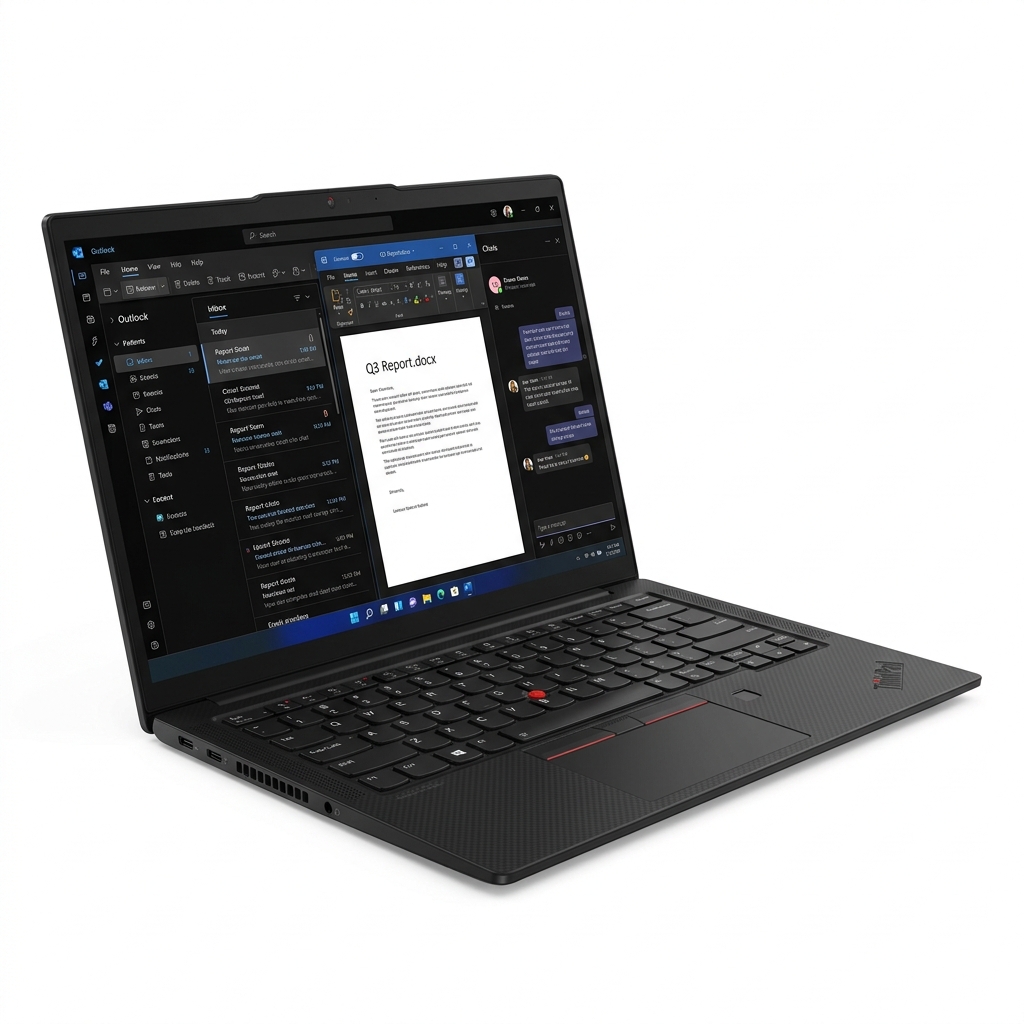
ThinkPad X1 Carbon
The ultimate enterprise workhorse. MIL-SPEC durability paired with the industry’s finest tactile keyboard; a timeless productivity tool.
Check Today's PriceTop AI Courses is an independent intelligence engine. We may earn an affiliate commission from qualifying purchases made through our "Market Links." This model ensures our architectural research remains decentralized, independent, and free for the global 2026 workforce.
Get Certified in AI Before You Graduate
“Google's AI certifications are the most recognized in hiring — and achievable while still in school. Build real, demonstrable AI skills that employers value.”
Explore Google AI Courses →The Architect's Library
Precision tools verified for 2026 AI ecosystems. Industrial-grade hardware for those who build the future.
Top AI Courses is an independent intelligence engine. We may earn an affiliate commission from qualifying purchases made through our "Market Links." This model ensures our architectural research remains decentralized, independent, and free for the global 2026 workforce.