How to Build an AI Portfolio That Gets You Hired in 2026
“To build an AI portfolio in 2026: complete one end-to-end project using an AI API (OpenAI, Anthropic, or Google), deploy it publicly (Vercel, Hugging Face Spaces, or GitHub Pages), document your process on GitHub, and write one article explaining what you built and what you learned. This combination is what recruiters at AI companies are specifically looking for.”

Educational content only. AI-assisted and editorially reviewed. See full Legal Notice.
How to Build an AI Portfolio That Gets You Hired in 2026
Direct Answer: In 2026, AI companies use AI agents to screen candidates before any human sees a resume. These agents look for three things: GitHub repositories with commits in the last 90 days, deployed projects with a live URL, and evidence of problem-solving documentation. A certificate without a portfolio is a claim without evidence. Here's how to build the evidence in 30 days.
Why Portfolios Now Matter More Than Certificates
The certification market has been flooded. In 2022, a Google AI certificate was a differentiator. By 2026, 4.2 million people hold one. The certificate proves you completed a course. The portfolio proves you can do the work.
Recruiters at companies like OpenAI, Anthropic, and Google DeepMind have been explicit about this shift in 2026 job postings:
Expert Statement"We look for GitHub portfolios, Hugging Face model cards, or deployed demos more than certifications. Certifications tell us you studied. Projects tell us you built."
Expert Statement— *Senior Recruiter, AI Infrastructure Team, 2026*
---
The Minimum Viable AI Portfolio
You don't need 10 projects. You need three things done well:
| Component | What It Proves | Time to Build |
|---|---|---|
| 1 Deployed Project | You can ship, not just learn | 10–20 hours |
| 1 GitHub Repository | You can document and version | 2–5 hours |
| 1 Write-up / Article | You can communicate your thinking | 3–5 hours |
That's 15–30 hours of focused work. Four weekends.
---
10 AI Project Ideas (Ranked by Hiring Impact)
Tier 1: Highest Impact (Deploy These)
1. Domain-Specific Chatbot
Build a chatbot trained on a specific knowledge base — your industry's regulations, a product's documentation, a legal domain. Use OpenAI's API or Anthropic's Claude API with a retrieval layer.
*Why recruiters care:* RAG (Retrieval-Augmented Generation) architecture is the #1 enterprise AI use case in 2026. Building one demonstrates direct commercial relevance.
2. AI-Powered Data Analysis Tool
Take a public dataset (Kaggle, government data, sports statistics) and build a tool that lets users ask natural language questions about it. Connect an LLM to a structured data layer.
*Why recruiters care:* Data x AI is the highest-demand intersection. Shows you understand both sides.
3. Automated Workflow with AI Decision Points
Use Make.com or n8n to build an automation that incorporates AI decision-making — sentiment analysis on incoming emails, automatic categorization of support tickets, or content brief generation from search data.
*Why recruiters care:* Shows you understand AI as infrastructure, not just a chatbot.
---
Tier 2: Strong Supporting Evidence
4. Fine-Tuned Model
Take an open-source model (Mistral, Llama 3) and fine-tune it on domain-specific data. Document the process, the dataset, and the performance comparison.
5. AI Agent with Tool Use
Build a simple autonomous agent that uses tools — a web search tool, a calculator, a file reader — to complete multi-step tasks. The OpenAI and Anthropic documentation includes starter templates.
6. AI Evaluation Framework
Build a systematic way to test an AI model's outputs for accuracy, bias, and consistency. This is a non-coding-heavy project that showcases IBM AI Ethics thinking.
---
Tier 3: Good for Beginners
7. Prompt Library
Document 50–100 optimized prompts for a specific industry. Include what each prompt does, why it works, and examples of output. Simple to build, easy to share.
8. AI Cost Calculator
Build a tool that estimates the API cost for different AI tasks at different model tiers. Practical, useful, and demonstrates understanding of the economics of AI deployment.
9. Data Annotation Tool
A simple web interface for labeling training data. Shows understanding of the ML pipeline beyond model interaction.
10. Industry-Specific AI Literature Summary
Use an AI pipeline to monitor, read, and summarize recent papers or news in your industry vertical. Document the architecture and outputs weekly. Demonstrates both AI literacy and domain expertise.
---
Where to Deploy Your Projects
| Platform | Best For | Cost | Visibility |
|---|---|---|---|
| Vercel | Web apps (Next.js, React) | Free tier | Very high (professional URL) |
| Hugging Face Spaces | ML models and demos | Free tier | Very high (AI community sees it) |
| GitHub Pages | Documentation, static sites | Free | High |
| Replit | Quick prototypes | Free tier | Medium |
| Railway | Full-stack apps with databases | Free tier | Medium |
Hugging Face is particularly valuable — the AI research community uses it as a standard reference point. A well-documented project on HF Spaces gets seen by researchers at major labs.
---
How to Document Your Work (The Part Most People Skip)
The README file on your GitHub repository is your interview before the interview. Make it count:
1. Problem statement: What problem does this solve? Be specific.
2. Architecture diagram: A simple diagram showing how data flows through your system.
3. Key design decisions: What did you try that didn't work? Why did you choose your final approach?
4. Performance metrics: If applicable, how well does it work? What are its limitations?
5. How to run it: Clear instructions for anyone to replicate your work.
The last point is critical. A recruiter's AI agent will try to run your code. If it fails in the first 3 steps, your project is marked as non-functional and deprioritized.
---
Expert Verdict: PORTFOLIO IS THE NEW RESUME
VERDICT SCORE: 9.6/10
The professional who completes a Google or OpenAI certification and builds one deployed project will outperform the professional who holds three certifications and no portfolio in nearly every hiring funnel in 2026. The ratio of builders to certificate holders is approximately 1:8. Being a builder is the current competitive advantage.
---
The Builder's Hardware Stack
MacBook Pro M4 — Best for AI Development
*Runs local models, compiles Python environments, and deploys to Vercel without breaking a sweat. The M4's neural engine accelerates local AI inference significantly.*
*When working with large model checkpoints and datasets locally, NVMe speed is the bottleneck. This eliminates it.*
---
Your 30-Day Portfolio Sprint
At the end of Day 30, you have a live project, a public repository, and a documented thought process. That's a portfolio.
Find the Certifications That Build These Skills →
Top AI Courses is an independent intelligence engine. We may earn an affiliate commission from qualifying purchases made through our "Market Links." This model ensures our architectural research remains decentralized, independent, and free for the global 2026 workforce.
Hardware Validation
Vetted tools for peak Trends performance in high-yield AI workflows.

Macbook Air
The world’s premier laptop for mainstream users. An unprecedented fusion of silent performance, ultra-slim aesthetics, and multi-day battery longevity.
Check Today's Price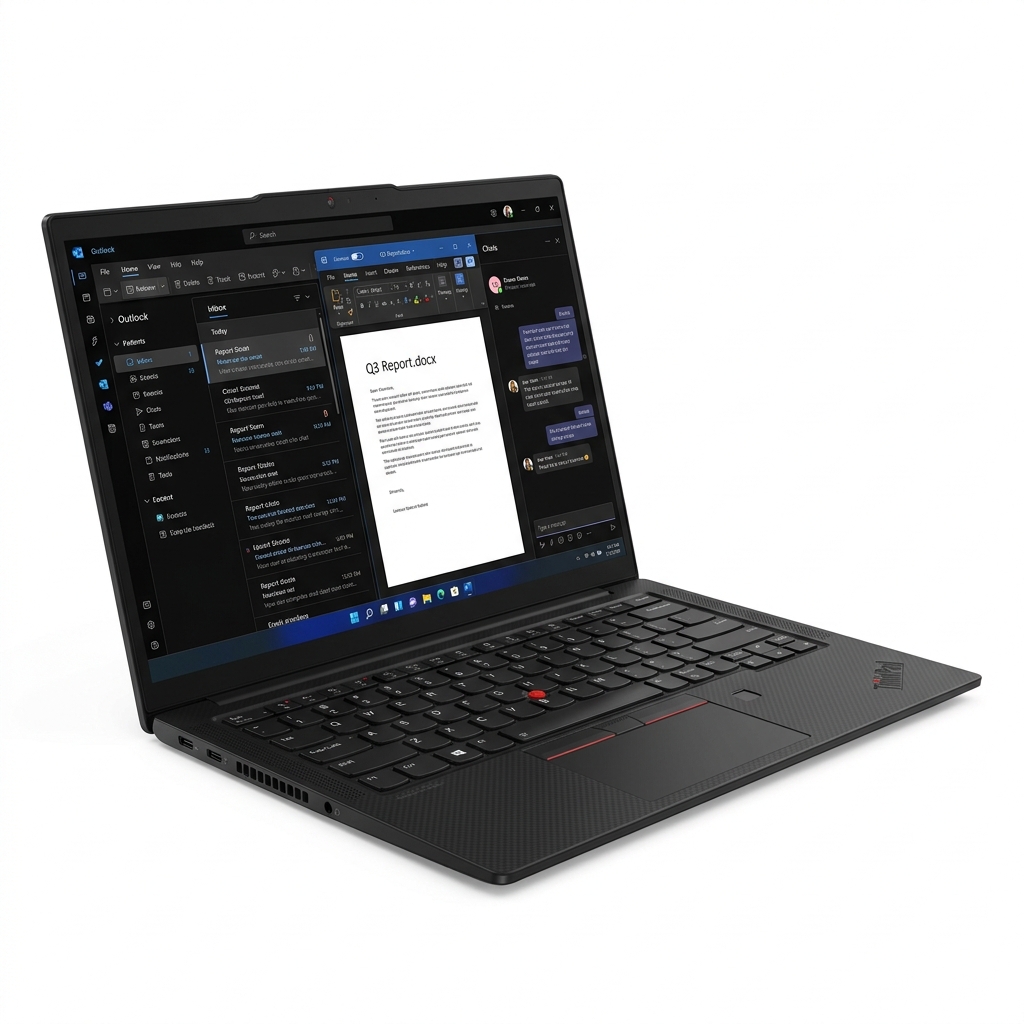
ThinkPad X1 Carbon
The ultimate enterprise workhorse. MIL-SPEC durability paired with the industry’s finest tactile keyboard; a timeless productivity tool.
Check Today's PriceTop AI Courses is an independent intelligence engine. We may earn an affiliate commission from qualifying purchases made through our "Market Links." This model ensures our architectural research remains decentralized, independent, and free for the global 2026 workforce.
AI Jobs That Require a Portfolio in 2030
“See which future roles specifically require portfolio evidence and how to position now.”
See Future AI RolesThe Architect's Library
Precision tools verified for 2026 AI ecosystems. Industrial-grade hardware for those who build the future.
Top AI Courses is an independent intelligence engine. We may earn an affiliate commission from qualifying purchases made through our "Market Links." This model ensures our architectural research remains decentralized, independent, and free for the global 2026 workforce.