How to Learn AI From Scratch in 2026: The Complete Beginner Roadmap
“To learn AI from scratch in 2026: start with Google AI Essentials or Andrew Ng's AI For Everyone (conceptual foundation, no math required). Then choose your path — non-technical (prompt engineering, AI tools for your field) or technical (Python → data science → machine learning → deep learning). Most beginners reach productive AI use within 2-4 months; job-ready technical skills take 8-18 months.”

Educational content only. AI-assisted and editorially reviewed. See full Legal Notice.
How to Learn AI From Scratch in 2026: The Complete Beginner Roadmap
The most common question from AI beginners: "Where do I even start?"
The second most common: "I've been stuck in tutorial loops for months — how do I make progress?"
This guide addresses both. It is honest about what it actually takes — the timeline, the prerequisites, the stumbling blocks — and gives you a clear roadmap regardless of your starting point.
---
Before You Start: Choose Your Path
"Learning AI" means very different things depending on your goal. The roadmap splits into two fundamentally different paths at the beginning.
Path A: Using AI (Non-Technical)
Goal: Use AI tools effectively in your current profession, become an AI-fluent professional, pursue roles like prompt engineer or AI product manager.
Prerequisites: None. Functional computer literacy is sufficient.
Timeline: 2-8 weeks to useful proficiency; 3-6 months to professional-level AI fluency.
Path B: Building AI (Technical)
Goal: Build ML models, deploy AI systems, work as ML engineer or data scientist.
Prerequisites: Willingness to learn programming. No prior coding experience necessary, but you will be learning it.
Timeline: 8-18 months to job-ready skills with consistent effort (1-2 hours/day minimum).
Most beginners should start with Path A regardless of eventual goals — practical AI use builds intuition that makes technical learning faster and more meaningful.
---
Path A: The Non-Technical Roadmap
Week 1-2: Conceptual Foundation
Resource: Google AI Essentials (free to audit) or Andrew Ng's AI For Everyone
These courses answer the questions that make everything else make sense:
Do not skip this. Beginners who jump straight to tools without conceptual understanding misuse them consistently.
Week 3-4: Apply AI to Your Actual Work
Open a Claude Pro or ChatGPT Plus account ($20/month). Spend one week using it for everything in your job:
Do not try to evaluate whether AI is good or bad yet. Just use it for everything and notice what happens.
Month 2: Deepen Proficiency in Your Domain
Find the 3 tasks in your work where AI saves the most time. Go deep on those — develop effective prompt templates, refine your workflow, measure the time savings.
Key skill to develop: Prompt engineering — the ability to give AI precise instructions that produce useful outputs consistently. Resources: OpenAI's prompt engineering guide (free), Anthropic's prompting documentation (free).
Month 3+: Certification
Complete the formal certification that signals your AI proficiency to employers. Google AI Essentials is the most accessible and widely recognized.
→ Google AI Essentials — no prerequisites required
---
Path B: The Technical Roadmap
Phase 1: Python Basics (6-8 weeks)
You cannot build AI without Python. See our complete Python for AI guide for the detailed roadmap.
Goal: Write Python scripts confidently. Read CSV files, process data, write functions, use libraries.
Resource: Kaggle's Python course (free, data-science focused, 5 hours)
Phase 2: Data Science Fundamentals (6-8 weeks)
NumPy, Pandas, Matplotlib. All AI work starts with data. You must be able to load, clean, explore, and visualize datasets before modeling.
Goal: Complete a Kaggle dataset exploration — load data, clean it, answer 3 analytical questions, visualize the answers.
Resource: Kaggle's Pandas course (free) + Seaborn gallery for visualization examples.
Phase 3: Machine Learning (8-10 weeks)
scikit-learn. Classical ML algorithms — regression, classification, clustering. The concepts here (training/testing, overfitting, cross-validation, feature engineering) underpin everything in AI.
Goal: Build a model that predicts something you find interesting, evaluate it honestly, deploy it as a simple web app with Streamlit.
Resource: Kaggle's Intro to Machine Learning (free) + Andrew Ng's ML Specialization on Coursera (paid, but best foundational course).
Phase 4: Deep Learning (8-12 weeks)
PyTorch. Neural networks, CNNs, sequence models, transfer learning.
Goal: Fine-tune a pre-trained image classifier on your own dataset; build a text classifier using a pre-trained language model.
Resource: Fast.ai Practical Deep Learning (free — the best deep learning course available).
Phase 5: Large Language Models (6-8 weeks)
Hugging Face + API development. Working with pre-trained LLMs, building applications on top of them, deploying models as APIs.
Goal: Build and deploy a RAG (retrieval-augmented generation) application that answers questions about a document collection.
Resource: Hugging Face NLP Course (free) + LangChain documentation.
---
The Mistakes That Slow Beginners Down
Tutorial accumulation without building. Watching 50 hours of tutorials produces less learning than building one real project. After every tutorial section: build something.
Trying to understand everything before using it. AI libraries and frameworks have deep internals. You do not need to understand backpropagation to use PyTorch effectively, any more than you need to understand combustion to drive a car. Use it first, understand it as you go.
Setting unrealistic timelines. Most AI beginner resources understate the time required. Building genuine ML engineering skills from scratch takes 12-18 months of consistent effort. Expecting 3-month results leads to discouragement when reality differs.
Ignoring the non-technical path. Many people who want "to work in AI" would achieve their actual goals faster via AI product management, prompt engineering, or AI applications in their domain — paths that do not require coding. Be honest about what outcome you actually want.
---
Resources Organized by Cost
Free:
Low cost (under $50/month):
Certification fees:
The entire technical AI learning path — from zero to job-ready — can be completed for under $500 in course and certification fees using free courses plus exam fees. The investment is time, not money.
→ Browse structured AI certification paths by role and experience level
Hardware Validation
Vetted tools for peak Careers performance in high-yield AI workflows.

Macbook Air
The world’s premier laptop for mainstream users. An unprecedented fusion of silent performance, ultra-slim aesthetics, and multi-day battery longevity.
Check Today's Price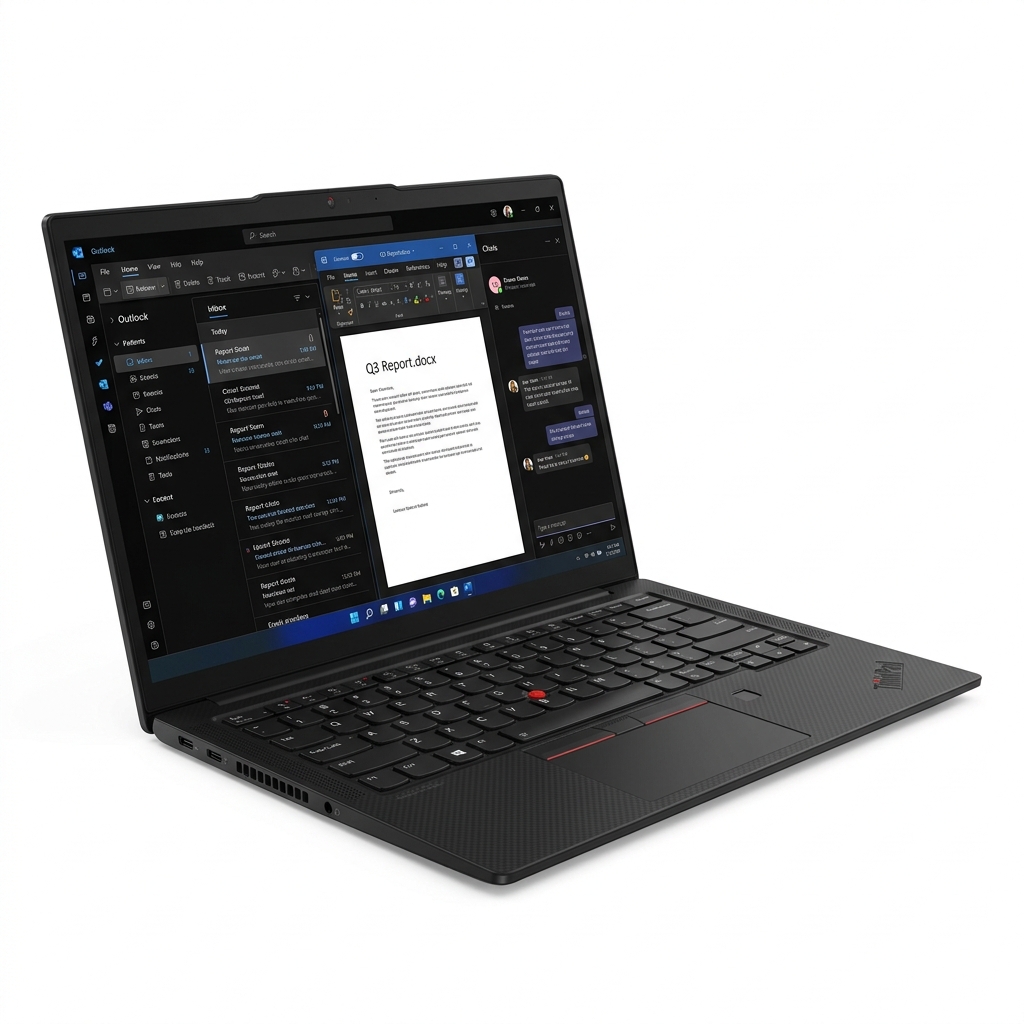
ThinkPad X1 Carbon
The ultimate enterprise workhorse. MIL-SPEC durability paired with the industry’s finest tactile keyboard; a timeless productivity tool.
Check Today's PriceTop AI Courses is an independent intelligence engine. We may earn an affiliate commission from qualifying purchases made through our "Market Links." This model ensures our architectural research remains decentralized, independent, and free for the global 2026 workforce.
Start Your AI Learning Journey
“Google AI Essentials is the most recognized starting point — no prerequisites, 10 hours, directly applicable to any professional role.”
Start with Google AI Essentials →The Architect's Library
Precision tools verified for 2026 AI ecosystems. Industrial-grade hardware for those who build the future.
Top AI Courses is an independent intelligence engine. We may earn an affiliate commission from qualifying purchases made through our "Market Links." This model ensures our architectural research remains decentralized, independent, and free for the global 2026 workforce.